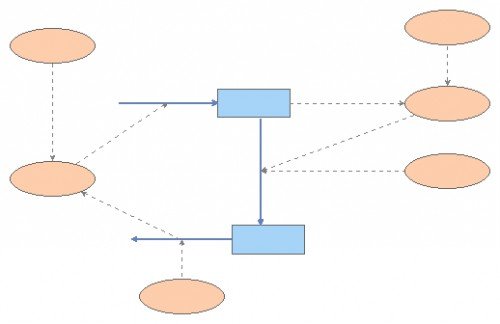
The glistening smartphone in your hand, the fresh-baked bread on your table, the clothes on your back – each is the visible tip of a vast, invisible iceberg. Beneath the surface lies a "Production & Distribution Ecosystem," a global, hyper-complex network connecting raw material extraction, transformative manufacturing, and intricate logistical pathways. This isn't just about factories and trucks; it's a living, breathing system of industrial activities that begins long before a product ever takes shape, often incurring an "environmental debt" in the form of habitat loss, resource depletion, or greenhouse gas emissions.
Today, these ecosystems operate largely unseen, and their cumulative impact is pushing our planet toward dangerous, uncharted territory. The very systems designed to meet human needs are inadvertently driving us towards "unsafe zones," challenging the fundamental stability of Earth's life-support systems.
At a Glance: Our Production & Distribution Problem
- Invisible Global Web: Every product links back to a vast, complex ecosystem of extraction, manufacturing, and logistics.
- Environmental Debt: Production inherently creates ecological costs from resource acquisition, often unseen by consumers.
- Three Life Stages, Three Burdens: Products have Upstream (raw materials), Core (manufacturing), and Downstream (use & disposal) phases, each with measurable environmental loads.
- Design Dictates Destiny: A product's environmental impact is largely determined at the design stage, long before production begins.
- Planned Obsolescence: Many products are intentionally designed to fail or become outdated, fueling a relentless cycle of consumption and waste.
- The Greenwash Fog: Sophisticated marketing often obscures true environmental impacts, leading to consumer "decision paralysis."
- Planetary Boundaries Breached: Our current production model operates on unsustainable assumptions, pushing critical global ecological limits past their safe thresholds.
- Circular Is Critical: Moving from a linear "take-make-dispose" model to a circular one is essential for true sustainability.
The Invisible Hand That Shapes Our World (and Its Footprint)
Imagine the journey of a single T-shirt. It starts not in a clothing store, but perhaps in a cotton field thousands of miles away, requiring vast amounts of water and pesticides. Then, it's processed in a gin, spun into yarn, dyed, woven into fabric, cut, sewn, packaged, shipped across oceans, trucked to a distribution center, and finally, delivered to a retail shelf. Every single step, from the moment a resource is acquired to the final disposal of the garment, is part of its production ecosystem.
This intricate web, often globalized and distributed across continents, makes it incredibly challenging for anyone – let alone the average consumer – to grasp the full environmental and social cost. It’s a bit like trying to understand the sprawling complexity of all about show business just by watching a single movie; you see the polished final product, but the colossal machinery behind it remains hidden. This invisible nature allows environmental burdens to be outsourced and obscured, leading to what some call an "environmental debt" that we collectively owe the planet.
For a production ecosystem to be truly sustainable, it would need to function more like a biological system. In nature, waste from one process becomes a vital input for another, creating a closed loop. Today, however, our industrial metabolism largely operates on a linear path, ending in landfills and atmospheric emissions.
The Product's Journey: A Life Cycle of Burdens
Every product we interact with, from a plastic bottle to a washing machine, embarks on a physical life cycle with distinct phases, each carrying a measurable burden on the environment. Understanding these phases is crucial to identifying where the biggest impacts lie.
1. Upstream Activities: The Genesis of Impact
This phase encompasses everything from the initial extraction of raw materials—mining metals, felling timber, drilling for oil—to their purification and the manufacturing of basic components. Think about the energy required to smelt aluminum from bauxite ore or the water needed to grow cotton. This is where the initial "environmental debt" is accumulated: habitat destruction, deforestation, water pollution, and massive energy consumption for processing. The choices made here, often far from the consumer's sight, set the stage for the product's entire environmental footprint.
2. Core Production: Assembly, Packaging, and the First Mile
Once raw materials are transformed into components, they converge for final assembly. This phase includes the energy-intensive manufacturing processes, the packaging that will protect (and often outlive) the product, and the logistics involved in moving goods from the factory gate to initial retail hubs. While often more visible, the impacts here—like factory emissions or the materials chosen for packaging—are still largely determined by designers and producers, not end-users.
3. Downstream Consequences: Use, Disposal, and the End Game
This is the phase where you, the consumer, directly interact with the product. It includes the energy consumed during its use (think of your refrigerator or washing machine), and its ultimate fate. Will it be discarded, recycled, repaired, or reused? The "burden" in this phase can vary wildly. For energy-hungry appliances, the usage phase often dominates the environmental impact. However, for single-use plastic items, the upstream extraction and core production phases are usually the most impactful, as their operational lifespan is fleeting.
The crucial takeaway is that these burdens are not evenly distributed. The initial design of the product often locks in the majority of its environmental impact, making downstream consumer choices less powerful than we might imagine.
Designed for Disaster? How Product Choices Lock In Impact
Before a single screw is turned or a drop of dye is mixed, a product's environmental fate is largely sealed in the design studio. Every material choice, every packaging decision, and every intended lifespan has profound, lasting consequences.
Consider material selection: a product might use a laminated plastic pouch because it's cheaper and offers better shelf life, even if that multi-layered structure makes it practically unrecyclable. On the other hand, a mono-material cardboard box might be slightly more expensive initially but vastly simplifies end-of-life recycling. The market, driven by immediate cost efficiencies, often favors materials with poor environmental outcomes. Consumers, lacking transparent information about these fundamental design choices, are left with a frustrating "decision paralysis." We want to do the right thing, but how can we choose when the critical information is deliberately obscured?
The Seduction of Short-Lived Goods: Planned Obsolescence
At the heart of many contemporary Production & Distribution Ecosystems lies a principle fundamentally at odds with sustainability: "planned obsolescence." This isn't an accident; it's a deliberate design strategy where products are engineered to fail, become outdated, or simply fall out of favor within a predetermined timeframe.
Think about that smartphone that mysteriously slows down after a couple of years, or the washing machine whose crucial part becomes prohibitively expensive to replace. Designers might choose cheaper, shorter-lived components, or make repair intentionally difficult by gluing parts together or requiring specialized tools. This forces consumers into a cycle of repurchase, ensuring a continuous revenue stream for manufacturers.
The environmental cost of planned obsolescence is staggering, particularly evident in the colossal mountains of electronic waste (e-waste). These discarded gadgets contain a treasure trove of valuable, rare earth minerals, but also a witches' brew of hazardous materials. Too often, this e-waste is shipped to developing nations, where it's processed in unregulated conditions, exposing workers to toxins and polluting local environments, all for the sake of extracting a few cents worth of copper or gold. It's a stark example of "telecoupling," where the environmental and health costs of consumption in wealthy nations are exported to poorer ones.
Packaging's Paradox: A Brief Life, a Long Legacy
Packaging is arguably one of the most visible manifestations of our linear production model. It's designed for a fleeting purpose – to protect, preserve, and promote a product for a brief period – yet it's often made from materials engineered to last for centuries. This fundamental paradox creates an immense waste challenge.
Consumers often feel good about tossing items into the recycling bin, but the reality of "recyclability" is far more complex than it appears on a label. What's "technically recyclable" (meaning the material can be processed) isn't always "practically recyclable" (meaning your local municipal system will or can process it economically).
- Bioplastics: These often sound like a silver bullet, but many require specialized industrial composting facilities that are rare. If they end up in standard plastic recycling streams, they become contaminants.
- Laminated Pouches: Those shiny snack bags or coffee pouches often comprise multiple layers of different materials—plastic, foil, sometimes even paper. Separating these layers economically is virtually impossible, rendering them unrecyclable despite individual components being theoretically reusable. They're destined for the landfill.
- Mono-Material Design: The truly sustainable alternative. Using a single type of plastic (like HDPE or PET) or metal significantly increases the probability of successful, economical recycling. It simplifies the sorting process and maintains the material's value.
The packaging dilemma highlights the urgent need for a shift in design thinking, moving away from convenience at all costs toward systems that prioritize end-of-life solutions.
The Earth's Report Card: Industrial Metabolism and Planetary Boundaries
To truly understand the Production & Distribution Ecosystems, we can turn to the discipline of "industrial ecology." This field views human economic activity as a form of "metabolism," much like a biological organism. A healthy metabolism optimizes for minimal leakage and maximal circularity, ensuring that resources are continuously utilized. The goal is to design industrial systems that operate more like natural ecosystems: where the "waste" of one process becomes a valuable "input" for another.
A key tool in this analysis is "Life Cycle Assessment (LCA)." This scientific methodology rigorously measures a product's total environmental burden from "cradle to grave"—from raw material extraction to final disposal. LCA can reveal surprising impacts, often highlighting that the most significant environmental costs occur in the often-invisible upstream phases. It's a powerful way to quantify the environmental debt and move beyond vague claims.
The problem is, our current industrial metabolism operates under a dangerous assumption: that Earth has an infinite supply of resources and an unlimited capacity to absorb our waste. This assumption fundamentally clashes with the scientific concept of "Planetary Boundaries." These are the nine global environmental limits that define a safe operating space for humanity. Crossing these boundaries—which include climate change, biodiversity loss, and biogeochemical flows—increases the risk of abrupt and irreversible environmental changes.
Consumption, particularly in affluent nations, is the primary driver pushing several of these critical boundaries past their safe thresholds:
- Climate Change: Driven overwhelmingly by energy use throughout all stages of production, from extracting and refining fossil fuels to powering factories and transporting goods.
- Biosphere Integrity (Biodiversity Loss): Directly impacted by raw material extraction (e.g., mining, deforestation), land-use changes for agriculture and industrial expansion, and pollution from industrial processes.
- Biogeochemical Flows (Nitrogen and Phosphorus Cycles): Severely altered by the overuse of synthetic fertilizers in agriculture, leading to excessive runoff into waterways, creating dead zones, and disrupting aquatic ecosystems.
Our current Production & Distribution Ecosystems have created a system of "telecoupling," where the environmental costs of our consumption are frequently exported to less affluent regions. We enjoy cheap goods, while communities far away bear the brunt of pollution, habitat destruction, and resource depletion. A sustainable future absolutely requires that we realign our industrial metabolism with the planet's finite biophysical limits.
Navigating the Murky Waters: Greenwash and Consumer Dilemmas
The sheer volume of product choices, coupled with a deliberate lack of verified information, can create "decision paralysis" for consumers who genuinely want to make better choices. This is further compounded by "greenwash," a sophisticated marketing practice where companies use vague, emotionally resonant language and imagery to imply environmental friendliness without providing measurable data about a product's actual footprint.
Think of packaging adorned with images of lush forests, abstract "eco-friendly" symbols, or phrases like "natural" or "sustainable" without any concrete certifications or data to back them up. Greenwash acts as a cognitive shortcut, making consumers feel good about their purchase without the company having to implement meaningful systemic changes. It exploits our desire to be responsible while maintaining the status quo.
How do you, as a consumer, cut through the greenwash?
- Look for Certifications: Seek out reputable third-party certifications (e.g., Fair Trade, USDA Organic, Cradle to Cradle, Energy Star). These involve rigorous auditing and data.
- Demand Data: Be wary of vague claims. "Less plastic" is good, but "X% post-consumer recycled plastic" is better. "Eco-friendly" is meaningless; "Carbon-neutral certified by XYZ" is verifiable.
- Question Lifespan: Does the product seem built to last? Is it repairable? Are spare parts available?
- Check Ingredients: Understand what goes into the product and its packaging. Are they mono-material? Are they known toxins?
Reimagining Production: The Circular Imperative
The path to a sustainable future demands a radical shift from our prevailing linear "take-make-dispose" model to a truly "circular" economy. This isn't just about recycling; it's about fundamentally redesigning how we create, use, and manage products and materials.
In a circular model, materials are kept in use at their highest possible value for as long as possible. This involves:
- Design for Durability and Repairability: Products are built to last, with modular components that can be easily replaced or upgraded.
- Design for Disassembly: Products are engineered so they can be taken apart efficiently at the end of their useful life, allowing components and materials to be easily recovered.
- Remanufacturing and Reuse: Instead of discarding, products are restored to like-new condition (remanufacturing) or repurposed for new uses (reuse).
- Recycling with Quality: When materials cannot be reused or remanufactured, they are recycled into new products without significant degradation of quality.
The primary challenge to implementing this circular model is economic: virgin materials are often cheaper than recovered ones. The cost of extraction, processing, and disposal is largely externalized, meaning it's not reflected in the price we pay. This is where policy interventions become crucial. "Extended Producer Responsibility (EPR)" schemes, for instance, mandate that producers bear the financial or physical responsibility for managing their products at the end of their life cycle. By internalizing these costs, EPR incentivizes companies to design more sustainable, repairable, and recyclable products from the outset.
Decoupling economic growth from virgin resource consumption is not just an environmental ideal; it's an economic imperative. A circular economy fosters innovation, creates new jobs in repair and remanufacturing, and builds resilience against volatile raw material prices.
What You Can Do: Becoming a Conscious Participant
The shift from unsustainable Production & Distribution Ecosystems to truly regenerative ones will require systemic change, driven by policy, innovation, and corporate responsibility. But you, as a conscious consumer and citizen, are not powerless. Every choice you make sends a signal through the ecosystem.
- Demand Transparency: Support brands that openly share their supply chain information, LCA data, and sustainability metrics. If a company is vague, push for specifics.
- Prioritize Durability Over Disposable: Invest in products built to last, even if they cost more upfront. Ask about warranties, repair services, and the availability of spare parts.
- Embrace Repair and Reuse: Before buying new, consider if an item can be repaired, swapped, or bought second-hand. Support local repair shops.
- Understand Your Local Recycling: Learn what your municipal system actually recycles. Avoid "wish-cycling" (putting non-recyclables in the bin) as it contaminates streams.
- Vote with Your Wallet and Your Voice: Choose brands committed to circular principles, mono-material design, and ethical sourcing. Advocate for policies like EPR and stronger anti-greenwash regulations.
- Question Packaging: Opt for products with minimal or mono-material packaging, or those that offer refill options.
- Reduce Overall Consumption: The most impactful action is often simply buying less, consuming more mindfully, and valuing experiences over material possessions.
The "Production & Distribution Ecosystems" we have built are a testament to human ingenuity, but they are also pushing our planet towards its limits. By understanding their true nature, confronting their hidden costs, and collectively striving for circularity, we can begin to reshape these powerful systems into forces that regenerate, rather than deplete, our shared home.